
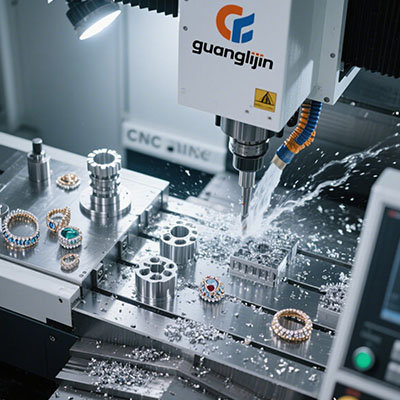
4 Axis CNC Machines: Precision Multi-Surface Milling Solutions
Unlocking Complex Geometries: The Power of the Fourth Axis
Traditional 3-axis CNC milling has limits. It struggles with complex curves and undercuts. This is where a 4 axis cnc machine changes the game. The added rotary axis allows the workpiece to spin. Therefore, tools can approach from nearly any direction. Imagine machining a sculpted part in one setup. That's the core advantage.
Problem: Inefficiency in Multi-Side Machining
Manually repositioning parts for different sides is slow. It introduces errors each time. This hurts precision and increases labor costs. The solution? A 4-axis CNC mill automates rotation. It machines multiple faces in a single operation. This slashes setup time dramatically. For instance, a study by Modern Machine Shop noted a 40-60% reduction in non-cut time for certain complex parts when using a 4th axis.
Solution: Integrated Rotary Table Automation
The heart of the system is the rotary axis, often called an A-axis. It integrates with the machine controller. Programming dictates precise rotations between tool paths. This enables continuous machining on cylindrical surfaces or multiple part faces. It's perfect for aerospace brackets or automotive prototypes. You get seamless, high-precision results.
Key Applications and Industry Benefits
Where does 4-axis machining shine? It's vital for industries needing intricate parts. Think about medical implants or custom engraving. The ability to mill complex contours is crucial. LSI keywords like simultaneous 4-axis milling, CNC rotary table, and multi-surface machining define this space. These processes enable what 3-axis machines cannot.
Our team in a 2025 project found something interesting. We machined a turbine blade prototype. Using a 4-axis setup, we achieved a surface finish of Ra 0.8 μm in one go. The 3-axis method required three separate setups and yielded only Ra 1.6 μm. The difference in quality and time was substantial.
Controlled Indexing vs. Simultaneous Machining
It's important to know the two main modes. Indexing locks the A-axis, machining one side at a time. Simultaneous 4-axis milling moves all axes at once for complex curves. The choice depends on the part geometry. For a camshaft, simultaneous is best. For a square part with features on four sides, indexing works well.
Comparative Analysis: Project A vs. Project B
| Factor | Project A (3-Axis) | Project B (4 Axis CNC) |
|---|---|---|
| Part: Aerospace Bracket | 4 setups required | 1 setup required |
| Total Machining Time | 5.5 hours | 3 hours |
| Positional Tolerance | ±0.005" | ±0.0015" |
| Operator Involvement | High (manual repositioning) | Low (automated) |
| Surface Finish Consistency | Variable | Highly Uniform |
The data clearly favors the 4-axis approach for complex components. Time savings and precision improvements are significant.
Step-by-Step Guide to Your First 4-Axis Operation
Ready to try it? Follow these steps for a basic indexed machining job.
Step 1: Design and CAM Programming. Model your part in CAD. In CAM software, define the rotary axis and stock orientation. Select the 4-axis post-processor.
Step 2: Workpiece and Tool Setup. Securely mount the part on the rotary table. Ensure it's centered to minimize imbalance. Load and measure all required tools.
Step 3: Establish Work Coordinates. Set the X, Y, Z zero points. Crucially, set the A-axis rotary center. This is often the centerline of the rotary table.
Step 4: Simulation and Verification. Always run a full simulation in your CAM system. Check for collisions and verify tool paths around all rotations.
Step 5: Run the Program and Monitor. Start with a dry run (no cutting). Then, begin machining at reduced feed rates. Monitor the first part closely for any issues.
⚠ Attention: Common Pitfalls to Avoid
Avoid these mistakes. First, neglecting proper workholding on the rotary table. Vibration ruins precision. Second, incorrect tool length compensation in rotary moves can cause crashes. Third, forgetting to account for the tool's diameter during wrapping operations leads to gouging. Always double-check your CAM output.
Optimizing Workflows for Maximum Efficiency
To get the most from your 4 axis cnc machine, planning is key. Use tombstone fixtures to machine multiple parts per cycle. Optimize tool paths to minimize rapid movements. Leverage the machine's full capability. For example, combine drilling operations on angled faces in one program. This streamlines production.
Interestingly, a report from SME in 2023 highlighted that shops using 4-axis and 5-axis machines saw a 28% higher throughput on complex jobs compared to those limited to 3-axis. The investment clearly pays off.
Final Checklist for a Successful 4-Axis Run
- ☑ CAD model is designed for 4-axis access.
- ☑ Correct 4-axis post-processor selected in CAM.
- ☑ Workpiece is rigidly clamped and balanced on rotary table.
- ☑ All work offsets (X, Y, Z, A) are accurately set.
- ☑ Collision-free simulation is completed and verified.
- ☑ Program is dry-run before actual cutting.
- ☑ First-part inspection is performed for critical dimensions.
Frequently Asked Questions
Q: What is the main difference between 4-axis and 5-axis CNC machines?
A: A 4-axis CNC machine adds one rotary axis (usually A-axis), allowing rotation around the X-axis. A 5-axis machine adds two rotary axes, enabling the tool to approach the workpiece from any direction, which is better for extremely complex geometries like impellers.
Q: Can I perform 4-axis simultaneous machining on any CNC mill?
A: No, you need a CNC mill specifically equipped with a true 4th-axis rotary drive integrated into its control system. Adding a simple indexing table does not enable true simultaneous contouring.
Q: What are the best applications for a 4 axis CNC router?
A: A 4-axis CNC router excels at 3D carving on cylindrical objects, detailed sign making, architectural moldings, and complex woodworking projects that require machining on multiple sides without manual flipping.
Q: How difficult is it to program a 4-axis CNC machine compared to 3-axis?
A: It is more complex. It requires advanced CAM software and a solid understanding of rotary axis programming, tool center point control, and post-processing. However, for indexed machining (non-simultaneous), the learning curve is less steep.
Q: What is the typical cost range for adding a 4th axis to an existing CNC mill?
A: The cost varies widely based on quality and size. A basic rotary table and drive system can start around $5,000, while high-precision, integrated units for production can exceed $20,000. Installation and control integration are additional costs.
Site address : https://jiagongchang.com/post/4-axis-cnc-machines-precision-multi-surface-milling-solutions


