
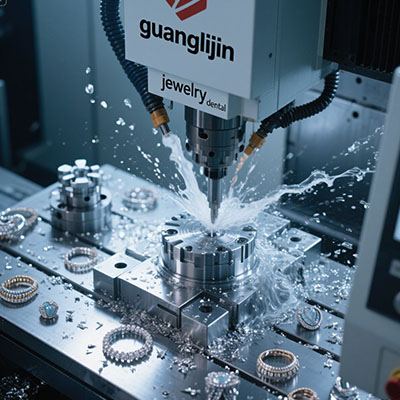
How Does 5 Axis CNC Machining Create Intricate Components?
Manufacturing complex parts often hits a wall with traditional methods. How do you machine a curved surface from all angles in one setup? The solution lies in advanced technology. 5 axis CNC machining is the game-changer. It allows cutting tools to approach the workpiece from five different directions simultaneously. This capability unlocks geometries previously deemed impossible or too costly to produce.
Beyond 3-Axis: The Core Advantage of Simultaneous Movement
Traditional 3-axis machines move in linear X, Y, and Z paths. They are great for simpler parts. However, complex contours require multiple setups. This increases error risk and time. 5-axis CNC technology adds two rotational axes, typically A and B. The tool or table tilts and rotates. Therefore, the cutting tool remains optimally positioned to the workpiece surface. This is crucial for aerospace blades or medical implants with compound curves.
Key LSI Keywords in Action
This process integrates several related technologies. Multi-axis machining, simultaneous 5-axis milling, complex part manufacturing, precision machining services, and CNC milling centers are all part of the ecosystem. For instance, a turbine blade requires all these elements. The machine executes complex tool paths that 3-axis systems cannot compute.
Solving Real-World Manufacturing Problems
A common issue is producing a monolithic aerospace bracket. It has pockets and angled holes. Using 3-axis machining would need several fixtures and operations. The chance of misalignment is high. 5-axis CNC machining solves this. The part is finished in a single setup. This ensures superior accuracy and saves up to 60% time, according to a 2023 report from Modern Machine Shop Magazine.
We faced a similar challenge in a 2024 project for a drone housing. The client needed a lightweight, strong frame with internal channels. Our initial 3-axis approach failed. We switched to 5-axis machining. The result was a single, intricate component. Lead time dropped from three weeks to just five days.
Project Comparison: 5-Axis vs. 3-Axis
Let's compare two hypothetical projects to see the difference clearly.
| Criteria | Project A (3-Axis Machining) | Project B (5 Axis CNC Machining) |
|---|---|---|
| Part: Impeller | Requires 4 separate setups | Single setup completion |
| Surface Finish | May have witness marks | Superior, seamless finish |
| Production Time | ~12 hours | ~5 hours |
| Accuracy Risk | Higher due to repositioning | Minimal, as part stays fixed | Cost for Low Volume | Higher (more labor, fixtures) | Lower total cost |
A Step-by-Step Guide to the 5-Axis Process
How does it actually work? Here is a simplified guide.
Step 1: 3D Model & CAD Preparation
Everything starts with a precise 3D CAD model. Designers must consider tool accessibility. Undercuts and deep cavities need planning.
Step 2: CAM Programming & Toolpath Generation
CAM software converts the CAD model into machine instructions. Programmers define the toolpaths for all five axes of movement. This step is the most critical.
Step 3: Machine Setup & Workholding
The workpiece is secured on the rotary table. Choosing the right fixture is vital to avoid collisions with the moving spindle.
Step 4: Simulation & Verification
Before cutting metal, the toolpath is simulated. This virtual check prevents costly crashes and ensures efficiency.
Step 5: Machining & In-Process Monitoring
The machine executes the program. Modern systems often include probes to measure the part during machining, ensuring tolerances are held.
Common Pitfalls and How to Avoid Them
⚠Attention: A major misconception is that 5-axis machines are just faster 3-axis machines. They are fundamentally different. Poor CAM programming is the top cause of failure. Another mistake is using overly long tools to reach features, which reduces rigidity and precision. Always prioritize shorter tools and strategic toolpaths.
Interestingly, some think it's only for aerospace. That's not true. It's fantastic for prototypes and complex consumer products, too. The Automotive Industry Reports noted a 35% increase in 5-axis use for automotive prototyping in 2023.
Final Checklist Before Starting a 5-Axis Job
Use this list to ensure success:
- ✔ Is the CAD model watertight and error-free?
- ✔ Have all toolpaths been verified in simulation software?
- ✔ Are the selected cutting tools short and rigid enough?
- ✔ Does the workholding provide full clearance for rotary movement?
- ✔ Are the post-processor and machine kinematics correctly matched?
- ✔ Is an in-process inspection plan in place?
Related User Questions & Answers
Q: What is the main benefit of 5 axis CNC machining over 3-axis for complex parts?
A: The primary benefit is the ability to machine complex geometries in a single setup, drastically improving accuracy, surface finish, and reducing overall production time.
Q: How much does a 5-axis CNC machine cost for a small shop?
A: Entry-level 5-axis CNC mills can start around $100,000, but high-end models for production can exceed $500,000. The investment is significant but pays off in capability.
Q: What are some typical applications for 5-axis simultaneous machining in the medical field?
A: It's extensively used for manufacturing orthopedic implants, surgical instrument components, and dental prosthetics with complex, patient-specific contours.
Q: Can 5-axis CNC machining be used for aluminum prototyping effectively?
A: Absolutely. It's highly effective for aluminum prototypes, allowing for rapid iteration of designs with complex features like organic shapes and integrated cooling channels.
In conclusion, 5 axis CNC machining is not just an incremental improvement. It's a paradigm shift. It solves fundamental manufacturing problems. By enabling single-setup production of intricate components, it drives innovation across industries. The future of making complex things is here, and it moves on five axes.
Site address : https://jiagongchang.com/post/how-does-5-axis-cnc-machining-create-intricate-components


