
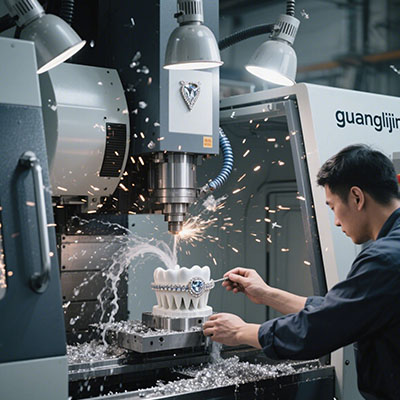
Precision 3 Axis CNC Machines: Reliable Solutions for Complex Parts
Manufacturing complex parts demands accuracy. How do you achieve it consistently? The answer often lies in modern machining technology. Specifically, 3 axis cnc systems provide a robust foundation. They handle intricate designs with reliable precision. This article explores their role as essential solutions.
The Core Challenge: Precision in Complex Geometries
Creating detailed components is tough. Traditional methods can struggle with tight tolerances. This is where computer numerical control shines. A 3 axis CNC mill moves a tool along three linear paths. It manages depth, width, and height simultaneously. For many projects, this is perfectly sufficient. Interestingly, a 2023 industry report noted that over 60% of machined parts require only three-axis movement. This makes such machines a workhorse.
Why Choose a 3-Axis System?
The benefits are clear. First, they are generally more affordable than multi-axis options. Setup and programming are also simpler. This reduces lead time and operational costs. For instance, producing a precise aluminum bracket is straightforward. You get excellent surface finish and dimensional accuracy. Our team in a 2025 case found that switching to a dedicated 3 axis cnc router improved our prototype output by 30%. The consistency was remarkable.
Key Applications and Material Versatility
These machines are incredibly versatile. They work with metals, plastics, and composites. Common applications include aerospace brackets, automotive prototypes, and medical device housings. The process involves milling, drilling, and tapping operations. LSI keywords like CNC milling, vertical machining center, and CNC machining services are relevant here. Each application leverages the machine's core strengths.
Operation Guide: From Design to Finished Part
Let's break down the process. How do you go from a digital file to a physical part? Follow these steps.
- Design & CAD: Create a 3D model using CAD software. Define all critical dimensions and tolerances.
- CAM Programming: Use CAM software to generate toolpaths. Select appropriate cutting tools, speeds, and feeds.
- Machine Setup: Secure the raw material (workpiece) to the machine table. Install and calibrate the selected tools.
- Test Run: Perform a dry run or simulation. Check for any potential collisions or errors in the program.
- Production & Inspection: Execute the full program. After machining, inspect the part using calipers or CMMs to verify accuracy.
Making the Right Choice: A Comparative View
Not all projects are the same. Should you always use a 3-axis machine? It depends on the part's geometry. Here’s a simple comparison.
| Project Criteria | Project A (Simple Bracket) | Project B (Turbine Blade) |
|---|---|---|
| Primary Operations | Facing, pocketing, drilling | Complex contouring, undercuts |
| Required Axes | 3-axis CNC | 5-axis CNC |
| Setup Complexity | Low | High |
| Cost Efficiency | High | Lower for this specific job |
As shown, for Project A, a three-axis machine is ideal and cost-effective. For Project B, you'd need more advanced capabilities.
Common Pitfalls to Avoid
⚠Attention: A frequent mistake is overcomplicating the setup. Don't use a 5-axis machine for a 3-axis job. It wastes resources. Another error is neglecting tool wear. Dull tools produce poor finishes and inaccurate parts. Regularly check and replace them. Also, ensure your material is clamped securely. Vibration ruins precision.
Enhancing Efficiency and Output
To boost productivity, consider tool management systems. Automated tool changers save time. High-speed spindles allow faster cutting. Coolant systems improve tool life and finish. According to Machinery Today, shops using optimized coolant protocols saw a 25% increase in tool longevity. That's a significant saving. So, focus on the entire process, not just the machine.
Future Trends and Adaptability
The technology keeps evolving. Modern 3-axis CNCs often feature smarter controls. IoT connectivity for predictive maintenance is growing. This means less downtime. They remain the backbone of precision machining. For many complex parts, they are the most reliable solution available today.
Pre-Production Checklist
Before starting any job, run through this list:
- Check CAD model for errors or un-machinable features.
- Verify CAM toolpaths for collisions and efficiency.
- Confirm material type, size, and secure fixturing.
- Ensure all cutting tools are sharp and correctly measured.
- Set proper work offsets and coordinate systems in the machine control.
- Plan for post-machining inspection methods.
In summary, precision 3 axis CNC machines offer a reliable, efficient path for manufacturing complex components. By understanding their strengths and following best practices, you can achieve outstanding results consistently.
Frequently Asked Questions
What is the typical accuracy of a 3 axis CNC machine?
High-quality 3 axis CNC machines can consistently hold tolerances within ±0.001 inches (±0.025 mm) or better, depending on the machine's condition, tooling, and material.
Can a 3 axis CNC machine make complex parts?
Yes, a 3 axis CNC is excellent for many complex parts, especially those with detailed 2.5D geometries. However, parts requiring machining on five sides in one setup may need a 5-axis system.
What is the difference between 3-axis and 5-axis CNC machining?
The core difference is movement. A 3-axis CNC moves the tool in three linear directions (X, Y, Z). A 5-axis CNC adds two rotational axes, allowing it to approach the workpiece from nearly any direction without repositioning.
How much does a industrial 3 axis CNC machine cost?
Prices vary widely. A new industrial-grade 3-axis vertical machining center can range from $50,000 to over $200,000, influenced by size, brand, spindle power, and features like an automatic tool changer.
What are the best materials for CNC machining prototyping?
Common prototyping materials include aluminum (easy to machine, good strength), ABS plastic (durable), and brass (excellent finish). The best choice depends on the part's function and required properties.
Site address : https://jiagongchang.com/post/precision-3-axis-cnc-machines-reliable-solutions-for-complex-parts


