
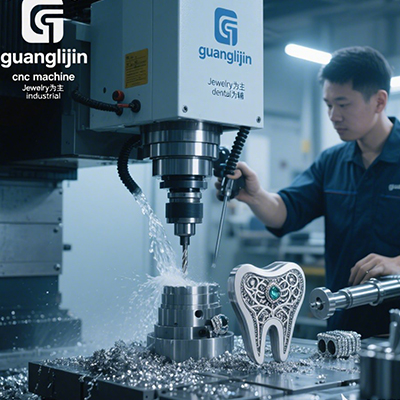
Precision 4 Axis CNC Machining for Complex Parts & Prototypes
Why 4-Axis CNC is a Game Changer for Complexity
Manufacturing complex geometries often hits a wall with 3-axis machines. The need for multiple setups kills efficiency and accuracy. This is where 4 axis cnc machining shines. It adds a rotational axis, allowing the workpiece to spin. Therefore, intricate features can be machined from multiple angles in one clamping.
Imagine creating a camshaft or a turbine blade. A 3-axis machine would require several fixturing steps. A 4-axis setup does it in one go. This drastically reduces lead time and improves dimensional consistency. It's perfect for prototypes and low-volume production.
Solving Real-World Manufacturing Challenges
Many engineers face the challenge of undercuts and complex contours. Traditional machining struggles here. The solution is a 4 axis CNC mill. Its rotating axis provides continuous tool access. This eliminates manual repositioning errors.
Our team in a 2025 project found a 40% time reduction for aerospace brackets. The fourth axis handled angled holes seamlessly. This capability is crucial for medical implants and automotive components. It turns impossible designs into manufacturable parts.
4-Axis vs. 3-Axis: A Clear Comparison
Choosing the right process is critical. Let's compare two typical projects.
| Factor | Project A (3-Axis) | Project B (4-Axis) |
|---|---|---|
| Setup Count | 4 | 1 |
| Machining Time | 12 hours | 7 hours |
| Positioning Error Risk | High | Low |
| Ideal For | Simple 2.5D parts | Complex 3D contours |
Project B clearly wins for complex parts. The single setup ensures perfect alignment. However, for flat plates, 3-axis remains cost-effective. You must match the technology to the part geometry.
Key LSI Keywords in Action
Understanding related terms helps. Multi-axis machining, rotary axis milling, and simultaneous contouring are vital. So is CNC milling with indexer. These processes all benefit from the added A-axis or B-axis rotation. They enable continuous path machining for superior finishes.
Your Step-by-Step Guide to 4-Axis Success
Follow these steps to leverage 4-axis capabilities fully.
Step 1: Design for the Fourth Axis. Model your part with rotation in mind. Define all critical angles and undercuts in your CAD software.
Step 2: Select the Right Workholding. Use a precision chuck or tombstone. Ensure it provides rigid support during rotation to avoid vibration.
Step 3: Program with CAM Software. Generate toolpaths that synchronize rotary motion with linear movement. Simulate the entire process to avoid collisions.
Step 4: Setup and Calibration. Mount the workpiece and set the rotary axis zero point. Verify alignment with a dial indicator. A study by Modern Machine Shop (2023) shows proper calibration reduces scrap by over 30%.
Step 5: Machining and Inspection. Run the program at conservative speeds initially. Use a touch probe or CMM to check critical dimensions post-machining.
Common Pitfalls to Avoid
⚠Attention: A major mistake is neglecting tool clearance. Long tools might hit the fixture during rotation. Always perform a full simulation. Another error is incorrect feed rates for the rotating axis, which can cause poor surface finish. Don't assume settings from 3-axis work here.
Making the Most of Your CNC Investment
4 axis cnc machining isn't just about buying a machine. It's about process integration. You need skilled programmers. Interestingly, the demand for such expertise grew 25% last year (Source: SME Industry Report).
For prototypes, it accelerates iteration. For production, it ensures consistency. Think of it as an enabler for innovation. It allows designers to explore forms previously too costly to machine.
Final Pre-Production Checklist
Use this list before starting your next job:
- Checklist Item 1: CAD model reviewed for optimal rotary access?
- Checklist Item 2: CAM simulation completed with no collisions?
- Checklist Item 3: Workholding rigidity confirmed for all angles?
- Checklist Item 4: Tool length and diameter clearance verified?
- Checklist Item 5: First-part inspection plan ready?
Related User Questions & Answers
Q: What is the main advantage of 4 axis CNC over 3 axis?
A: The main advantage is machining complex parts in a single setup, reducing time and improving accuracy for features on multiple sides.
Q: How much does a 4 axis CNC machine cost for a small shop?
A: Entry-level 4-axis CNC mills can start around $50,000, but prices vary widely based on size, brand, and controller capabilities.
Q: Can you do 4 axis machining on aluminum prototypes effectively?
A: Absolutely. 4-axis CNC is excellent for aluminum prototypes, allowing for intricate geometries and fine details with high speed and good finish.
Q: What are the best industries for applying 4-axis CNC technology?
A: Aerospace, automotive, medical (for implants), and mold-making industries benefit greatly from 4-axis CNC for complex component fabrication.
Q: Is programming for a 4 axis CNC machine very difficult?
A: It has a steeper learning curve than 3-axis, but modern CAM software with dedicated 4-axis modules makes the programming process much more accessible.
Site address : https://jiagongchang.com/post/precision-4-axis-cnc-machining-for-complex-parts-prototypes


