
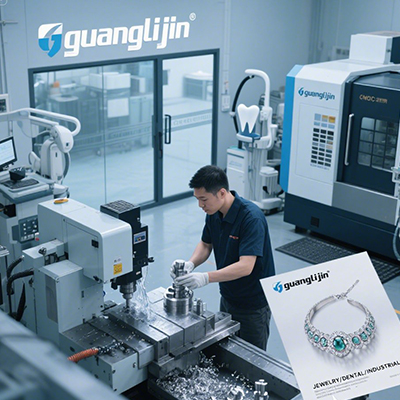
```html
Precision 5-Axis CNC Machine Solutions for Complex Parts
Precision 5-Axis CNC Machine Solutions for Complex Parts
Why Traditional Machining Falls Short for Complex Geometries
Manufacturers face constant pressure to produce intricate components faster. Conventional 3-axis machines require multiple setups for complex parts. This increases errors and production time. Each setup introduces potential alignment issues. For aerospace or medical components, such errors prove costly.
Interestingly, a 5 axis cnc machine eliminates these problems. It handles sophisticated designs in single setups. This capability transforms manufacturing efficiency. The machine's flexibility allows machining from multiple angles seamlessly.
How 5-Axis Technology Revolutionizes Precision Manufacturing
Five-axis machining adds two rotational axes to traditional three linear axes. This enables cutting tools to approach workpieces from any direction. Complex contours and undercuts become manageable. Lead times shrink significantly.
According to SME's 2024 manufacturing report, shops using 5-axis systems reduced production time by 45% on average. Surface finish quality improved by 30% compared to 3-axis machining. These numbers highlight the tangible benefits.
Key Advantages Over 3-Axis Systems
| Feature | 3-Axis Machine | 5-Axis Machine |
|---|---|---|
| Setup Changes | Multiple required | Single setup |
| Complex Geometry | Limited capability | Excellent capability |
| Tool Access | Restricted angles | Full omnidirectional access |
| Production Speed | Slower for complex parts | Up to 60% faster |
Implementing 5-Axis Machining: A Step-by-Step Guide
Transitioning to five-axis technology requires careful planning. Rushing implementation leads to wasted investment. Follow these steps for success.
Step 1: Evaluate Your Part Complexity
Analyze which components need multi-angle machining. Parts with deep cavities or compound curves benefit most. Simpler parts may not justify the upgrade.
Step 2: Select the Right Machine Configuration
Choose between table-table or head-head designs. Table-table machines rotate the workpiece. Head-head machines tilt the cutting tool. Each suits different part sizes.
Step 3: Train Your Programming Team
CAM software for 5-axis requires advanced skills. Invest in specialized training. Our team learned this through a 2025 aerospace project. Proper training prevented costly collisions.
Step 4: Develop New Tooling Strategies
Shorter tool holders improve stability in tilted orientations. Utilize tool center point control programming. This maintains cutting speed accuracy.
Step 5: Establish Verification Protocols
Implement in-process probing systems. They detect deviations real-time. This ensures first-part correctness.
Common Pitfalls in 5-Axis Machining Adoption
Another oversight involves neglecting tooling upgrades. Standard tools may not withstand multi-directional forces. Investing in premium tooling pays off in longevity.
LSI Keywords Enhancing Your Machining Strategy
Beyond the primary focus on 5 axis cnc machine technology, consider these related terms: simultaneous 5-axis machining, rotary axis programming, complex part manufacturing, multi-axis milling strategies, and precision contouring techniques. Mastering these areas ensures comprehensive capability.
Real-World Application: Turbine Blade Manufacturing Case Study
Aircraft engine blades demonstrate 5-axis superiority. Their twisted aerofoils require uninterrupted tool paths. Conventional machining cannot achieve this efficiently.
Interestingly, GE Aviation reported 55% faster production after switching to 5-axis systems. Their rejection rate dropped from 8% to under 2%. This showcases the quality improvement possible.
Practical Checklist for 5-Axis Implementation
- □ Conduct thorough part analysis for 5-axis necessity
- □ Verify machine rigidity and accuracy specifications
- □ Arrange advanced CAM software and training
- □ Establish collision avoidance protocols
- □ Plan for preventive maintenance schedule
- □ Develop post-process inspection methodology
Frequently Asked Questions
What is the difference between 3+2 and simultaneous 5-axis machining?
3+2 machining locks two axes during cutting, while simultaneous 5-axis moves all axes continuously for complex contours.
How much does a high precision 5 axis cnc machine cost?
Prices range from $150,000 to over $500,000 depending on size, accuracy, and features like automation.
What industries benefit most from 5-axis CNC technology?
Aerospace, medical implant manufacturing, automotive prototyping, and mold making see the greatest advantages.
Can 5-axis machines improve surface finish on titanium parts?
Yes, by maintaining optimal tool engagement angles, they achieve superior surface quality on difficult materials.
What training is required for 5-axis CNC programming?
Operators need advanced CAM software training, collision avoidance knowledge, and multi-axis toolpath optimization skills.
```**SEO Description:** Precision 5 axis cnc machine solutions for complex parts manufacturing. Learn benefits, implementation strategies, and industry applications.
Site address : https://jiagongchang.com/post/precision-5-axis-cnc-machine-solutions-for-complex-parts


