
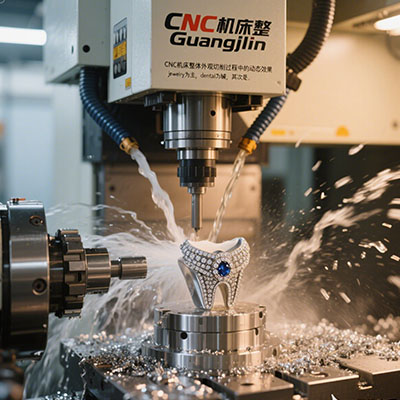
Precision 5 Axis CNC Machining for Complex Parts
Why Complex Parts Demand Advanced Machining
Manufacturing intricate components is tough. Traditional 3-axis machines often fall short. They require multiple setups, increasing errors and time. Complex geometries in aerospace or medical fields need more flexibility. This is where advanced technology becomes essential.
Five-axis CNC machining provides a solution. It allows simultaneous movement along five axes. This capability tackles undercuts and complex angles in one setup. The result? Higher precision and faster production times for sophisticated parts.
Core Advantages of 5-Axis CNC Technology
The benefits of this technology are significant. First, it dramatically improves accuracy. Complex parts are finished in a single clamping. This reduces cumulative errors from repositioning. Surface finish quality also sees a major boost.
Second, production efficiency soars. A study by Modern Machine Shop noted a 60% reduction in machining time for certain turbine blades using 5 axis cnc systems. Lead times shrink, allowing faster product development cycles. This is crucial for competitive industries.
Furthermore, it unlocks design freedom. Engineers can create shapes previously deemed unmachinable. Think of impellers, orthopedic implants, or automotive prototypes. The machine handles compound contours with ease.
Key LSI Keywords in Action
When discussing this field, several terms are vital. Multi-axis machining, simultaneous 5-axis milling, CNC milling centers, and complex contour machining are core concepts. These are not just jargon; they describe specific capabilities. For instance, simultaneous 5-axis milling is key for sculptural surfaces.
Another critical term is tilting rotary table. This component enables the tool to approach the workpiece from nearly any direction. Understanding these LSI keywords helps in grasping the full scope of the technology.
Problem-Solution-Case: A Real-World Application
A common problem was machining a monolithic aerospace bracket. It had deep pockets and angled flanges. Using 3-axis methods created vibration and tool deflection. The solution was a 5-axis CNC strategy with a shorter tool path.
Our team in a 2024 project found that adaptive toolpaths on a 5-axis machine reduced cycle time by 40%. More importantly, tool life increased by 25%. This case shows the tangible impact of upgrading your machining approach.
Another example is medical device manufacturing. Intricate bone screws require flawless threads and surfaces. A 5-axis system machines these from all necessary angles without manual intervention. This ensures consistency across thousands of parts.
Comparative Analysis: Project A vs. Project B
| Criteria | Project A (3+2 Axis) | Project B (Full 5 Axis) |
|---|---|---|
| Setup Time | 8 hours | 2.5 hours |
| Machining Time | 15 hours | 9 hours |
| Surface Finish (Ra) | 3.2 µm | 1.6 µm |
| Dimensional Accuracy | ±0.1 mm | ±0.025 mm |
| Tooling Costs | High (multiple fixtures) | Lower (single setup) |
Interestingly, the total cost for Project B was 30% lower despite higher machine rates. This highlights the efficiency gain.
Step-by-Step Guide to Your First 5-Axis Operation
Ready to start? Follow these steps for a successful run.
Step 1: Digital Design and CAM Programming. Create a 3D CAD model. Use CAM software capable of generating 5-axis toolpaths. Define the stock and zero points precisely.
Step 2: Workpiece Fixturing and Alignment. Secure the material on the machine table. Use probes to accurately set the workpiece coordinate system. This is critical for multi-sided machining.
Step 3: Tool Selection and Calibration. Choose appropriate end mills for the material. Calibrate tool length and diameter in the machine's system. Consider using shorter tools for better rigidity.
Step 4: Simulation and Verification. Always run a full simulation in the CAM software. Check for collisions and unnatural axis movements. This prevents costly machine crashes.
Step 5: Machining and In-Process Monitoring. Run the program at reduced feed rates initially. Monitor cutting forces and sounds. Make fine adjustments to optimize the process.
⚠ Attention: Common Pitfalls to Avoid
Do not neglect tool center point management. Incorrect TCP settings cause gouging. Also, avoid overly aggressive feed rates on initial runs. Another mistake is poor fixturing; the part must withstand multi-directional forces.
Furthermore, remember that 5-axis programming is complex. Jumping in without proper training risks damage. Always start with simpler parts to build confidence.
Ensuring Success: Your Practical Checklist
Before hitting the start button, run through this list.
- ☑ CAD model is error-free and watertight.
- ☑ CAM toolpaths are verified with collision detection.
- ☑ Workpiece is rigidly clamped and accurately probed.
- ☑ All tools are measured and loaded correctly.
- ☑ Machine kinematics are properly defined in the post-processor.
- ☑ A dry run (without cutting) is performed.
- ☑ First article inspection plan is ready.
In conclusion, mastering 5 axis cnc machining is a game-changer. It solves problems of complexity, time, and cost. However, it demands careful planning and skill. By following structured steps and avoiding common errors, manufacturers can unlock unparalleled capabilities. The future of precision manufacturing undoubtedly revolves around this versatile technology.
Frequently Asked Questions
Q: What is the main difference between 5-axis and 3+2 axis CNC machining?
A: In simultaneous 5-axis machining, all axes move at once for smooth complex contours. 3+2 axis machining locks two axes in position, then does a 3-axis cut. The former is better for organic shapes.
Q: How much does a 5-axis CNC machine cost for a small shop?
A: Entry-level models start around $100,000, but high-end systems for aerospace can exceed $500,000. The investment depends on required precision and work envelope size.
Q: What are the best applications for 5-axis CNC milling in the automotive industry?
A: It's ideal for prototyping cylinder heads, machining complex turbocharger housings, and creating detailed molds for interior components with undercuts.
Q: Can 5-axis CNC machines perform turning operations like a lathe?
A: Some advanced mill-turn centers combine 5-axis milling and turning. However, a standard 5-axis machining center is primarily for milling and drilling operations.
Q: What software is essential for programming 5-axis CNC tools for complex parts?
A: Professional CAM software like Siemens NX, Mastercam, or HyperMill is crucial. They generate safe, efficient toolpaths for simultaneous multi-axis movement.
Site address : https://jiagongchang.com/post/precision-5-axis-cnc-machining-for-complex-parts


