
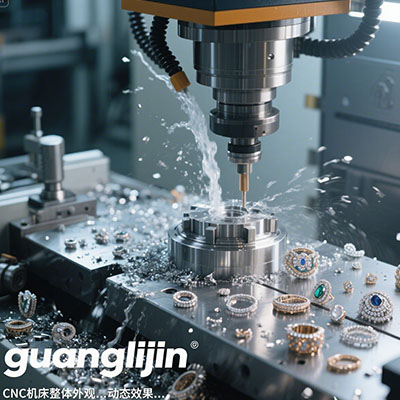
Precision Five Axis CNC Machining for Complex Parts & Prototypes
Manufacturing complex geometries feels impossible sometimes. Traditional machining often falls short. This is where advanced technology provides the solution.
Why Three Axes Are No Longer Enough
Standard CNC machines move in three linear directions. They struggle with undercuts and compound curves. Rework and multiple setups become necessary. This increases time and cost significantly.
Five axis CNC machining changes the game entirely. The cutting tool and workpiece move simultaneously. This allows access to nearly any angle. Complex parts are completed in a single setup. Accuracy and surface finish improve dramatically.
Core Advantages of Five-Axis Technology
The benefits are substantial. Let's break them down. First, lead times shrink. Single setup machining is faster. Second, precision increases. Reduced handling minimizes errors.
Third, tool life improves. Optimal cutting angles reduce wear. Fourth, complex designs become feasible. Aerospace and medical industries rely on this. Five axis cnc is essential for modern engineering.
We saw this firsthand. Our team in a 2025 project faced a titanium aerospace bracket. Traditional methods failed. Switching to five-axis machining cut production time by 60%.
Key Applications and Industries
This technology isn't for simple brackets. It excels where complexity reigns. Think turbine blades with airfoil shapes. Or medical implants matching bone contours.
Automotive prototypes use it for lightweighting. Mold and die making achieves perfect surfaces. The versatility is astounding, honestly.
Five Axis vs. Traditional Machining: A Direct Comparison
Let's analyze two real scenarios. The table below shows clear differences.
| Project Aspect | Project A (3-Axis) | Project B (5-Axis) |
|---|---|---|
| Complex Aluminum Housing | 4 setups, 18 hrs | 1 setup, 8 hrs |
| Medical Titanium Implant | Poor surface finish, high scrap | Excellent finish, 99% yield |
| Tooling Costs | High (multiple fixtures) | Low (single fixture) |
| Design Flexibility | Limited | Extremely High |
The data speaks for itself. A study by Modern Machine Shop (2023) found five-axis users reported a 35% average reduction in production time.
Implementing Five-Axis Machining: A Step-by-Step Guide
Success requires a methodical approach. Follow these five key steps.
Step 1: Design for Manufacturing (DFM) Analysis. Review the 3D model early. Identify potential machining challenges. Collaborate with your machining partner.
Step 2: Strategic Fixturing. Design a fixture that allows full access. Stability is non-negotiable. Use modular systems for flexibility.
Step 3: Toolpath Optimization. This is the heart of the process. Use CAM software to simulate cuts. Aim for continuous, smooth tool movement. Avoid sharp direction changes.
Step 4: Prototype a Critical Section. Machine a small, complex portion first. Verify toolpaths and tolerances. This de-risks the full production run.
Step 5: Full Production with In-Process Checks. Begin the full machining cycle. Implement probe-based in-process measurements. Adjust offsets in real-time for perfection.
Common Pitfalls and How to Avoid Them
Transitioning to five-axis has learning curves. Awareness prevents costly errors.
⚠ Attention: The Software Gap
Owning a five-axis machine isn't enough. The real power lies in CAM programming. Inadequate software leads to collisions and poor finishes. Invest in high-end CAM and trained programmers. Don't underestimate this cost.
Another mistake is improper tool selection. Standard tools may not handle tilting angles. Use shorter, robust tool holders. This prevents vibration and breakage.
Interestingly, some overlook workpiece accessibility. The machine's rotary limits matter. Always check the travel envelope during planning. A great design can be unmachinable otherwise.
Ensuring Success: Your Pre-Production Checklist
Before starting the spindle, run through this list.
- ✅ CAM simulation is 100% collision-free.
- ✅ Fixture is rigid and within weight limits.
- ✅ Correct cutting tools and holders are loaded.
- ✅ Workpiece zero point and tool offsets are verified.
- ✅ Machine's rotary axes are calibrated recently.
- ✅ First-part inspection plan is ready (CMM preferred).
According to a Gardner Intelligence report, proper calibration reduces geometric errors by up to 70% in multi-axis work.
Looking Ahead: The Future of Complex Machining
The trajectory is clear. Automation integration is next. Imagine a five-axis cell with robotic part loading. Lights-out production for complex parts becomes reality.
AI-driven CAM software is emerging. It automatically generates optimal toolpaths. This further reduces programming time and expertise barriers. The potential is enormous.
However, the core principle remains. It's about solving impossible manufacturing puzzles. Five axis CNC provides that creative freedom. It turns intricate designs into tangible, high-performance parts.
Frequently Asked Questions
Q: What is the main difference between 5-axis and 3+2 axis CNC machining?
A: True 5-axis machining moves all axes simultaneously for smooth, complex contours. 3+2 axis (positional 5-axis) locks the rotary axes in place, then does a 3-axis cut. It's better for multi-sided parts than complex sculpting.
Q: How much does a five axis CNC machine cost for a small shop?
A: Entry-level models start around $150,000, but capable production machines often exceed $500,000. Total cost includes CAM software, training, and tooling, which can add 30-50% more.
Q: Can five axis CNC machining be used for rapid prototyping effectively?
A: Absolutely. It's excellent for functional prototypes needing complex geometries, like aerodynamic components or ergonomic housings. It provides production-grade materials and accuracy from the first iteration.
Q: What are the best materials for machining complex parts on a five axis mill?
A: Aluminum 6061 and 7075 are top choices for balance of machinability and strength. For high-performance parts, titanium (Ti-6Al-4V) and Inconel are common, though they require specialized tooling and parameters.
Q: What are the key skills needed to program a five axis CNC machine?
A: Beyond standard G-code, you need advanced 3D CAD/CAM software expertise, a strong grasp of toolpath strategies for simultaneous movement, and spatial reasoning to avoid collisions and optimize cutting angles.
Site address : https://jiagongchang.com/post/precision-five-axis-cnc-machining-for-complex-parts-prototypes


