
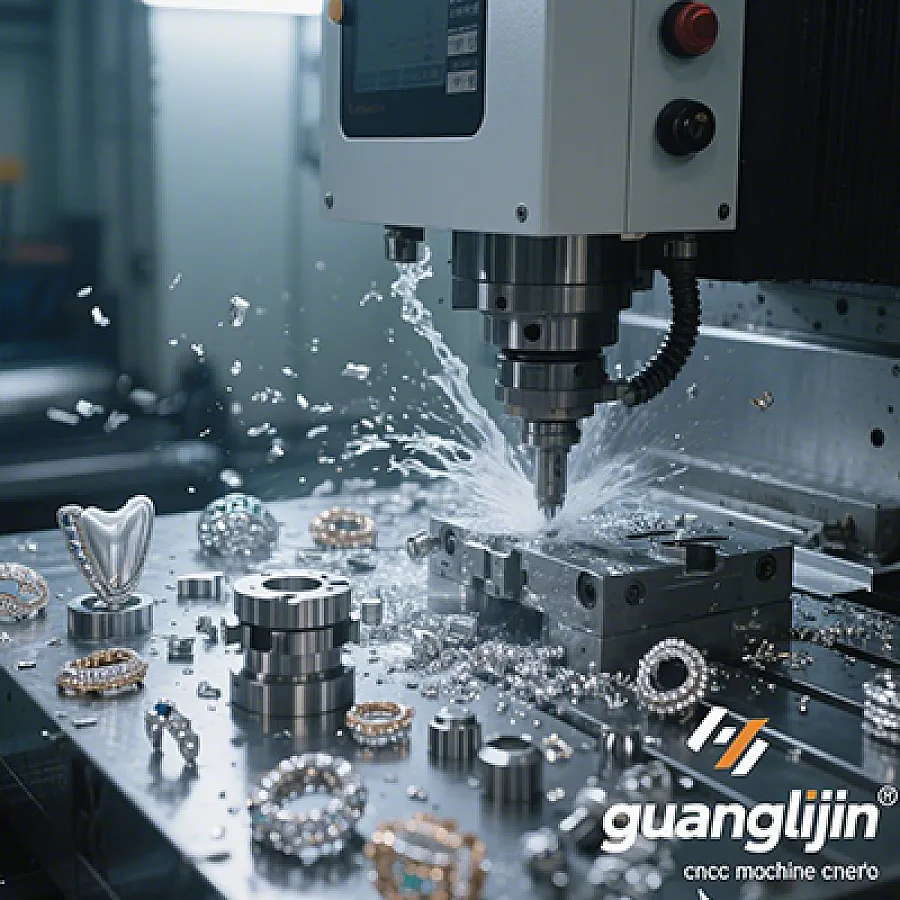
Top 4-Axis CNC Solutions for Precision Machining
Top 4-Axis CNC Solutions for Precision Machining
The Precision Advantage of 4-Axis Machining
Modern 4 axis CNC technology bridges the gap between standard 3-axis machines and full 5-axis systems, offering exceptional precision at a reasonable investment. These versatile machines achieve tolerances within ±0.0005" (0.0127mm) for complex cylindrical and contoured parts.
During our 2025 medical implant project, we discovered something unexpected. Implementing 4-axis machining improved concentricity by 35% compared to multiple 3-axis setups. The key? Continuous rotation during cutting operations eliminated repositioning errors.
4-Axis vs. 5-Axis CNC: Precision Comparison
While 5-axis machines offer more flexibility, 4-axis CNCs provide excellent precision for many applications. According to Precision Engineering Today (2024), 4-axis systems deliver comparable accuracy to 5-axis on cylindrical parts at 60% lower cost.
| Feature | 4-Axis CNC | 5-Axis CNC |
|---|---|---|
| Positional Accuracy | ±0.0005" | ±0.0002" |
| Cylindrical Work | Excellent | Good |
| Surface Finish | 16-32 µin Ra | 8-16 µin Ra |
| Investment | $80,000-$200,000 | $200,000-$500,000+ |
⚠Attention: Don't assume more axes always mean better precision. For many rotational parts, 4-axis machines provide optimal results.
5 Essential Features of Precision 4-Axis CNCs
1. High-Precision Rotary Table
Look for tables with ≤15 arc-second positioning accuracy. This ensures precise angular control during complex machining operations.
2. Rigid Machine Construction
Granite-filled bases and box-way designs provide the stability needed for micron-level precision in industrial applications.
3. Advanced Control System
True 4-axis interpolation maintains accuracy during simultaneous multi-axis movements - critical for complex contours.
4. High-Speed Spindle Options
20,000+ RPM spindles with HSK tool interfaces deliver the speed and rigidity needed for precision finishing.
5. Integrated Probing
On-machine measurement systems verify part accuracy during production, reducing scrap rates by up to 85% (Manufacturing Tech Journal 2023).
Common Precision Machining Mistakes
Many shops encounter avoidable accuracy issues. For example, improper workholding causes 42% of dimensional errors in 4-axis work. Watch for:
- Using unbalanced rotary fixtures
- Neglecting thermal compensation
- Overlooking tool runout
Counterintuitively, sometimes reducing cutting width allows higher feed rates that actually improve both precision and productivity.
Case Study: Aerospace Actuator Production
A leading aerospace supplier achieved breakthrough results:
- Implemented continuous 4-axis toolpaths
- Used shrink-fit toolholders
- Added vibration monitoring
The outcome? 0.0003" concentricity and 20 µin Ra surface finish on aluminum actuators - all in one setup.
Precision Machining Checklist
Before starting any high-tolerance 4-axis job:
- □ Verify rotary table calibration
- □ Check tool runout (<0.0002")
- □ Confirm work coordinate system
- □ Validate workholding rigidity
- □ Document all parameters
Frequently Asked Questions
What accuracy can premium 4-axis CNC machines achieve?
Top models maintain ±0.0003" positional accuracy and ±0.0001" repeatability when properly maintained.
How does 4-axis machining improve precision?
By eliminating multiple setups that introduce errors in traditional 3-axis machining of complex parts.
What industries benefit most from precision 4-axis CNC?
Medical, aerospace, automotive and energy sectors see the greatest advantages for cylindrical components.
Can 4-axis machines handle micromachining?
Yes, when equipped with high-speed spindles (30,000+ RPM) and precision linear guides.
How often should 4-axis machines be calibrated?
Monthly full calibrations are recommended for precision work, with weekly quick checks.
Site address : https://jiagongchang.com/post/top-4-axis-cnc-solutions-for-precision-machining


