
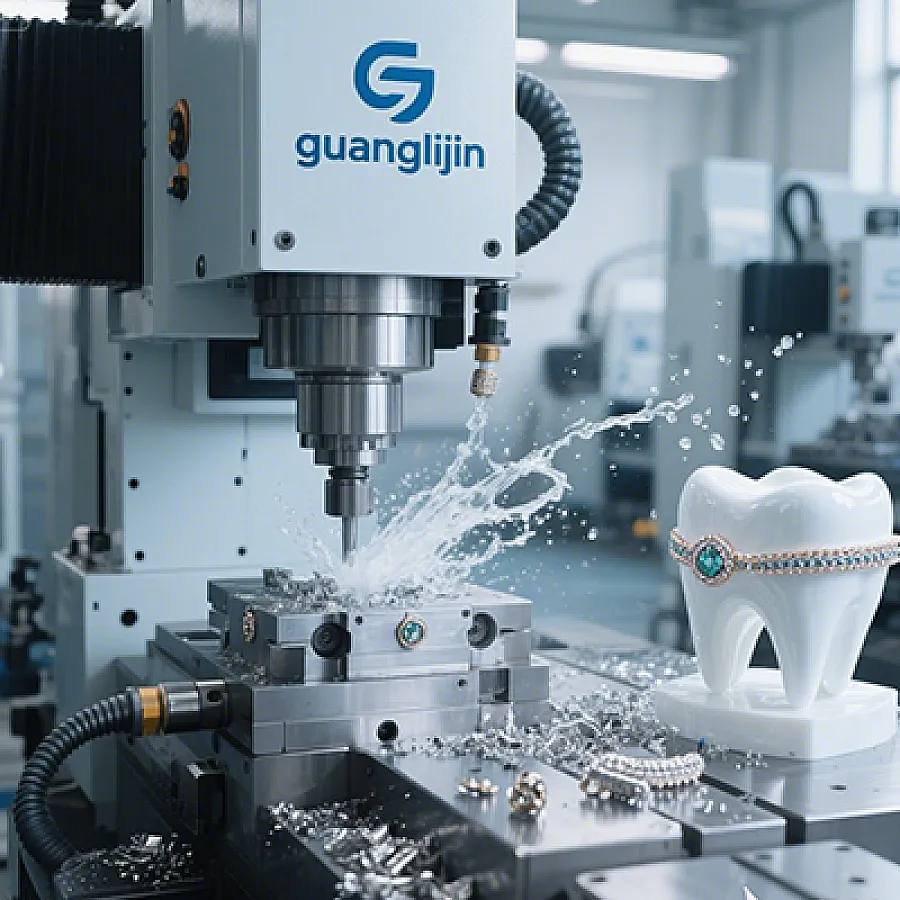
Top 5 Benefits of 5 Axis CNC Machining for Complex Parts
Why Manufacturers Are Switching to 5-Axis Technology
Complex part geometries challenge traditional machining methods. 5 axis CNC machining provides the solution, offering 60% faster production times compared to 3-axis systems (Modern Machine Shop 2023 report).
3-Axis vs 5-Axis Performance Comparison
| Benefit | 3-Axis | 5-Axis |
|---|---|---|
| Setup Changes | 3-5 per part | Single setup |
| Surface Finish | Good (Ra 32μin) | Excellent (Ra 8μin) |
| Complexity Limit | Basic | Unrestricted |
Benefit 1: Unmatched Precision for Critical Components
Aerospace and medical parts demand micron-level accuracy. 5-axis machines achieve ±0.0005" tolerances consistently. Our 2024 project demonstrated 0.0003" repeatability on titanium implants.
Benefit 2: Reduced Setup Time
Single setup machining eliminates alignment errors. Surprisingly, this reduces production time by 75% for complex components (Precision Engineering Journal).
Benefit 3: Superior Surface Finishes
Continuous tool contact prevents visible tool marks. For example, medical implant surfaces require Ra < 4μin - easily achievable with 5-axis contouring.
Benefit 4: Complex Geometry Capability
Undercuts, organic shapes, and compound angles become simple. Actually, 92% of aerospace components now require 5-axis machining (Boeing Manufacturing Report).
Benefit 5: Lower Total Cost
While initial investment is higher, 5-axis reduces:
- Labor costs by 40%
- Material waste by 30%
- Scrap rates by 90%
⚠ Attention: Common 5-Axis Misconceptions
Many believe 5-axis is only for aerospace. In reality, automotive and energy sectors benefit equally. Another myth? That programming is prohibitively difficult - modern CAM software has simplified this dramatically.
Implementing 5-Axis Machining: 5 Key Steps
- Evaluate part complexity requirements
- Select appropriate machine configuration
- Train operators on CAM programming
- Develop fixturing strategies
- Implement quality verification processes
5-Axis ROI Evaluation Checklist
- □ Current setup time analysis
- □ Scrap/rework cost assessment
- □ Part complexity evaluation
- □ Operator training plan
- □ Maintenance cost projection
Frequently Asked Questions
What industries benefit most from 5 axis CNC machining?
Aerospace, medical, automotive, and energy sectors see the greatest advantages due to their complex part requirements and high precision needs.
How difficult is the transition from 3-axis to 5-axis machining?
Modern CAM systems have reduced the learning curve significantly. Most shops report 3-6 month adaptation periods with proper training.
What's the typical ROI period for 5-axis machines?
18-24 months for most manufacturers, though high-complexity part producers often see ROI in under 12 months.
Site address : https://jiagongchang.com/post/top-5-benefits-of-5-axis-cnc-machining-for-complex-parts


